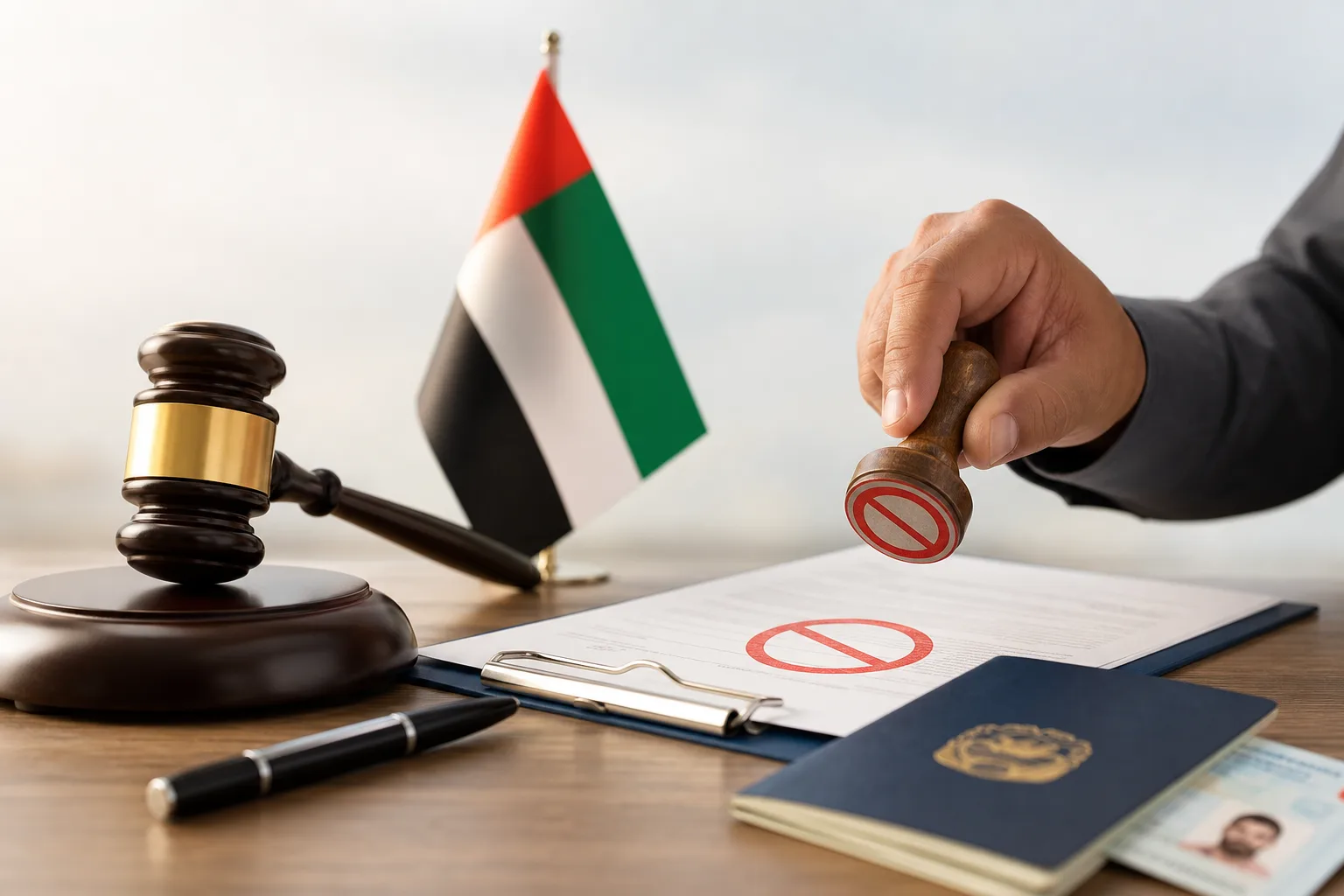

In 2026, an estimated 1 in 4 first-time free zone license applications in the UAE is returned for correction or outright denied (DSBH, 2026).
In 2026, an estimated 1 in 4 first-time free zone license applications in the UAE is returned for correction or outright denied (DSBH, 2026). Over 80% of those rejections trace back to administrative errors that could have been caught before submission. Resubmission fees run AED 500–2,000 per round. Each rejection adds 2–6 weeks of delay. Name conflicts alone account for roughly 30% of first-stage denials (industry estimate, 2025). And UBO non-disclosure fines can reach AED 100,000 under UAE AML regulations. Free zone license rejection Dubai is more common than most founders realise, and it is almost always preventable.
This guide breaks down the 10 most frequent reasons a free zone license application gets rejected in the UAE, shows you exactly how to check for each issue before you apply, and explains how to fix problems if they surface, so you can reach your license in hand without unnecessary delays or resubmission fees.
What Is Free Zone License Rejection Dubai and Why It Matters
Free zone license rejection Dubai occurs when a free zone authority refuses to approve a business license application due to errors in documentation, naming, activity selection, or compliance. It matters because each rejection adds 2–6 weeks of delay, triggers resubmission fees, and can hold up investor visas and bank account opening. A license application rejected Dubai is not a permanent block, but it is an expensive and avoidable setback.
How the Free Zone Approval Process Works
Free zone authorities review applications in sequential stages. A rejection at any one of them halts the entire process until the issue is resolved. Here's the typical flow:
Stage 1, Name Reservation: The authority checks your proposed trade name against its own registry and UAE-wide databases.
Stage 2, Activity Approval: Your selected business activities are verified against the zone's approved activity list.
Stage 3, Document Verification: All submitted documents are reviewed for completeness, validity, and correct attestation.
Stage 4, Final License Issuance: The authority issues the license once all prior stages clear.
A rejection doesn't always mean starting from scratch. But it always means a delay. Most UAE free zones send a rejection notice with a reason code, understanding that code immediately determines your next move.
A logistics startup applied to a Dubai free zone with "Emirates Freight Solutions" as its trade name, not realising the name was already reserved by another entity. The authority rejected the application at Stage 1, adding 18 days before a replacement name cleared. Resubmission fees for that correction round ran AED 750 (DSBH, 2026).
10 Common Free Zone License Rejection Reasons at a Glance
Rejection Reason | How to Prevent It |
|---|---|
Trade name conflict or prohibited word | Run a name search on the free zone portal and DED trademark database; prepare 3 ranked alternatives before submitting |
Activity not on free zone approved list | Download the zone's current activity list and map your operations to a listed code before name reservation |
Incomplete or expired documents | Audit every document for expiry (passport: 6-month minimum), page completeness, notarisation, and certified Arabic translation |
Corporate shareholder missing apostille/attestation | Verify Certificate of Incorporation is current and apostilled; attestation must typically be within 6 months of submission |
NOC not obtained from current sponsor | If you're on a UAE residence visa, obtain a No Objection Certificate from your current sponsor before applying |
Restricted activity, external approval missing | Check the zone's restricted activity list; secure pre-approvals from relevant regulators (e.g., MOHRE, DHA, KHDA) before submission |
Shareholder on immigration hold or sanctions list | Screen each shareholder via GDRFA/ICA portal and cross-check against OFAC, UN Security Council, and EU sanctions lists |
Why Administrative Errors Drive Most Rejections
The vast majority of free zone application denied Dubai cases involve paperwork gaps, not fundamental business model issues. Authorities aren't assessing commercial viability, they're checking regulatory compliance and completeness. That's actually good news: it means almost every rejection reason in this guide is fixable, often within days, if you catch it early.
Over 80% of rejected applications are approved on resubmission once the flagged issue is corrected (DSBH internal data, 2026). The problem isn't that founders have bad business ideas. It's that they submit without running a structured pre-check first.
Top 10 Reasons for Free Zone License Rejection Dubai
The top reasons for license rejection UAE include trade name violations, incompatible activity selection, incomplete documents, corporate shareholder attestation gaps, missing NOCs, unapproved restricted activities, shareholder blacklist holds, activity-description inconsistencies, undisclosed UBO information, and applying to the wrong jurisdiction for the chosen activity. Here's what each means and how to handle it.
1. Trade Name Violation: Existing Name, Prohibited Words, or Naming Rules
What it means: The UAE prohibits trade names that duplicate existing registered names, imply government affiliation, contain religious references outside approved formats, or use offensive language. UAE Cabinet Resolution No. 24 of 2021 sets out prohibited categories, including names referencing political parties or foreign governments.
How to check: Run a name search on the free zone's portal and cross-reference with the DED trademark database before submitting. This takes under 10 minutes and catches most conflicts upfront.
How to fix: Prepare three ranked alternative names before applying. If the first is rejected, the authority can move to your second choice without restarting the full application, saving you a full resubmission cycle.
2. Incompatible Business Activity Selection
What it means: Each free zone publishes its own approved activity list. Selecting an activity that isn't on it, or combining activities that require separate license categories, triggers rejection. Some zones offer 2,000+ listed activities; sector-specific zones may have fewer than 200. UAE free zone activity codes are structured on the ISIC Rev.4 four-level hierarchy (sections, divisions, groups, classes), published by the UN Statistics Division in 2008, so international founders can map their operations to this framework as a starting point.
How to check: Download the zone's current activity list and verify your intended operations map to a listed code before reserving a name. The guide on choosing the right business activity in Dubai walks through this process step by step.
How to fix: Either restructure your activity selection to fit the zone's list, or reassess whether a different free zone better matches your operations. Jurisdiction fit matters more than most founders realise.
3. Incomplete or Incorrect Documents
What it means: Missing pages, expired IDs, low-resolution scans, or documents not translated into Arabic by a UAE-certified translator are all grounds for rejection. Passport copies must typically be valid for at least 6 months beyond the application date. UAE-certified translation is mandatory for all non-Arabic, non-English documents.
How to check: Use a document checklist specific to your applicant type, individual versus corporate shareholder. The guide on essential documents required for business setup in Dubai is a reliable base reference.
How to fix: Audit every document for expiry date, page completeness, notarisation stamp, and certified translation before submission. One missing page in a 12-page MoA is enough to trigger a rejection.
4. Corporate Shareholder Document Issues: Expired Certificate of Incorporation or Missing Apostille
What it means: When a company is the shareholder (rather than an individual), the free zone requires a valid Certificate of Incorporation, Memorandum and Articles of Association, and a board resolution. All must be apostilled or attested through the UAE embassy in the country of origin. The Hague Convention on Apostille covers 125 member states as of 2024; non-member country documents require a full embassy legalisation chain.
How to check: Verify the Certificate of Incorporation is current (some jurisdictions issue certificates that expire annually) and that attestation was completed within the last 6 months of submission.
How to fix: A UK-based holding company applying as a shareholder submitted a Certificate of Incorporation that was valid but not apostilled. The free zone rejected the application. The apostille was obtained through the UK Foreign, Commonwealth and Development Office within 5 business days, and resubmission was approved without further issues. That's the model: identify the gap, fix it through the correct channel, resubmit.
5. NOC Not Obtained from Current Sponsor
What it means: If you're currently on a UAE residence visa sponsored by an employer or another entity, most free zones require a No Objection Certificate (NOC) from that sponsor before you can set up a new company. Skipping this step causes immediate rejection.
How to check: Confirm your current visa status. If you hold a UAE residence visa, contact your sponsor and request the NOC in writing before beginning your application.
How to fix: Obtain the NOC and attach it to your application. If your sponsor refuses, you may need to cancel your existing visa before proceeding, factor in the timeline this adds.
6. Restricted Activity Requiring External Approval
What it means: Certain activities, healthcare, education, financial services, food and beverage, require pre-approval from a relevant regulator before the free zone will issue a license. Examples include the Dubai Health Authority (DHA) for medical activities and the Knowledge and Human Development Authority (KHDA) for education.
How to check: Review the free zone's restricted activity list before applying. If your activity appears on it, identify the relevant external regulator and initiate that approval process first.
How to fix: Secure the external approval letter and include it in your application pack. Don't submit to the free zone until you have it in hand.
7. Shareholder on UAE Blacklist or Immigration Hold
What it means: If any shareholder has an unresolved immigration hold, overstay fine, or appears on an international sanctions list (OFAC, UN Security Council, EU consolidated list), the free zone's compliance team will flag the application and reject it.
How to check: Run each shareholder's name through the GDRFA (General Directorate of Residency and Foreigners Affairs) or ICA (Federal Authority for Identity, Citizenship, Customs and Port Security) portal. Cross-check against the three main sanctions lists before submitting.
How to fix: Resolve any outstanding immigration fines or visa issues before applying. Sanctions list hits require legal advice and cannot be self-resolved.
8. Inconsistency Between Activities and Business Description
What it means: The narrative business description in your application must align precisely with your selected activity codes. If you've selected "freight forwarding" as your activity but your description references "retail distribution," the reviewer will flag the inconsistency.
How to check: Read your business description against each activity code you've selected. They should tell the same story.
How to fix: Rewrite the business description to mirror the exact language of your selected activity codes. Keep it factual and consistent.
9. Undisclosed UBO or Beneficial Ownership Information
What it means: UAE Cabinet Resolution No. 58 of 2020 requires companies to maintain and disclose a register of Ultimate Beneficial Owners (UBOs), natural persons who own or control 25% or more of the company. Incomplete or missing UBO information is grounds for rejection, and deliberate non-disclosure carries fines that can reach AED 100,000 under UAE AML regulations.
How to check: Map your full ownership chain to natural persons before submitting. Every layer of the structure needs documentation.
How to fix: Prepare your UBO register in advance with supporting documentation for each beneficial owner. Submit it as part of your application pack, not as an afterthought.
10. Wrong Jurisdiction for the Chosen Activity
What it means: Not every free zone licenses every activity. Applying to a zone that doesn't support your sector, or that requires a mainland DED license for your specific operations, results in rejection at the activity-approval stage.
How to check: Confirm the zone supports your activity before you begin. Dubai free zones each have their own naming databases and activity lists; a name or activity accepted by one zone may be rejected by another.
How to fix: Identify the correct jurisdiction for your activity type before investing time in a specific application. Dubai South Business Hub Free Zone, for instance, is purpose-built for logistics, trade, and services businesses, activity-mismatch rejections are far less common for companies that genuinely belong in that corridor.
Pre-Application Checklist to Prevent Free Zone License Rejection Dubai
To prevent free zone license rejection Dubai, verify your trade name availability, confirm your activities appear on the zone's approved list, check all documents for validity and attestation, screen shareholders for immigration holds, disclose all UBO information, and obtain any required external approvals before submitting your application. A free zone application denied Dubai is almost always traceable to one of these gaps.
Document Verification: What to Audit Before You Submit
Use this numbered checklist before hitting submit on any free zone application:
Passport copies: valid for at least 6 months beyond the application date for all shareholders and managers.
Certificate of Incorporation (corporate shareholders): confirm it hasn't lapsed and is apostilled or embassy-attested within the last 6 months.
MoA/AoA, board resolution, certificate of good standing, and shareholder register: each requires apostille or UAE embassy attestation.
All non-Arabic/non-English documents: certified Arabic translation by a UAE-licensed translator is mandatory.
Scan quality: minimum 300 DPI; all pages included; no cropped stamps or signatures.
The guide on essential documents required for business setup in Dubai gives you the full base checklist. Layer your specific free zone's requirements on top of that foundation.
Shareholder and Ownership Screening Steps
Run each shareholder's name through the GDRFA or ICA portal to check for immigration holds before applying.
Screen all shareholders against OFAC, UN Security Council, and EU consolidated sanctions lists.
Map the full UBO chain to natural persons. Document every ownership layer with supporting evidence.
If any shareholder holds a UAE residence visa, confirm their current sponsor and obtain an NOC if required.
Free zone compliance teams run these checks independently. A hit at their end causes immediate rejection, and you won't always get advance notice. Running your own screen first gives you time to resolve issues before they become rejection reasons.
What Happens After a Free Zone Application Denied Dubai Decision
After a free zone application denied Dubai decision, the authority issues a rejection notice citing the reason code. You typically have 30–60 days to resubmit with corrections. Resubmission fees apply. In most cases, the application number is retained, you don't need to restart name reservation unless the name itself was the rejection reason. A license application rejected Dubai is not the end of the road; it's a specific instruction to fix a specific problem.
Reading and Acting on a Rejection Notice
UAE free zone rejection notices include a reason code or written explanation. Treat it as your action list, not a final verdict. Prioritise the first-listed reason, authorities typically surface the most critical issue first. Fixing secondary issues without addressing the primary one leads directly to a second rejection and a second round of fees.
If the notice is unclear, request a clarification call with the free zone's business setup team before resubmitting. Most free zones offer this. A 20-minute call can save you a 4-week resubmission cycle.
Is it possible to appeal a free zone license rejection in the UAE?
Yes. Most UAE free zones have a formal appeals or reconsideration process. You can request a review of the rejection decision, typically within 15–30 days of the notice. However, appeals are most effective when you've corrected the flagged issue, not simply challenged the decision without addressing the underlying cause.
Resubmission Timeline and Fee Expectations
Standard resubmission window: 30–60 days from rejection date, depending on the free zone.
Resubmission fees: AED 500–2,000 per correction round (DSBH, 2026); repeated rounds compound costs quickly.
Name conflict rejections: budget an additional 3–7 business days for a new name to clear reservation.
Visa and bank account opening: both remain on hold until the license is issued, factor this into your launch timeline.
How Dubai South Business Hub Free Zone Helps You Avoid Free Zone License Rejection Dubai
Dubai South Business Hub Free Zone reduces free zone license rejection Dubai risk through guided application